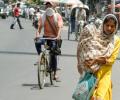
North India is experiencing an intense heatwave, with temperatures soaring to 48 degrees Celsius in some areas. Several states have issued warnings and advisories as the heatwave is expected to continue.

Health experts warn that rising temperatures could create a growing burden of silent and cumulative health stress across the population.

The IMD has issued an orange alert for heatwave conditions in parts of Kerala, prompting authorities to urge caution. Maximum temperatures are expected to reach up to 41 degrees Celsius in some districts. Strict guidelines have been issued, including the suspension of vacation classes and rescheduling of working hours.

IMD officials said the maximum temperature in the three districts could go up to 38 degrees Celsius.

'Can you believe there are over 26,500 deaths linked to heatwave-driven ozone in 2024?'

Many places across northern states including Delhi recorded above-normal temperatures crossing 40 degrees Celsius, while the India Meteorological Department warned of heatwave conditions in parts of Uttar Pradesh in the coming days. Jammu and Kashmir saw a dip in temperatures with fresh snowfall in the higher reaches and rainfall in the plains.

Several parts of India are experiencing a severe heatwave, with temperatures soaring past 44 degrees Celsius. States are issuing alerts and taking measures to protect people and animals from the extreme conditions.

Prime Minister Narendra Modi has urged Indian citizens to take precautions during the ongoing heatwave, emphasising hydration and care for vulnerable individuals and animals.

Fans heading to watch Portugal play Croatia in the World Cup round of 32 in Toronto on Thursday are being warned to keep hydrated and limit their alcohol intake after a heat warning issued by Environment Canada.

Large parts of India are experiencing a severe heatwave, with temperatures soaring to dangerous levels. Authorities have issued alerts and health advisories as the heatwave intensifies across multiple states.

Researchers at IIT Bombay have discovered that heatwaves in the Indo-Gangetic Plains are primarily caused by local land and weather conditions, rather than hot air originating from elsewhere, emphasising the need for location-specific early warning systems.
Uttar Pradesh is experiencing an intense heatwave, with Banda recording the highest temperature at 47.6 degrees Celsius. The IMD has issued a 'Red Colour Warning' for severe heatwave conditions. The extreme heat is disrupting daily life and economic activity, prompting government action to prevent heat-related illnesses.

High levels of ultraviolet (UV) radiation have been recorded across Kerala, prompting warnings from the Kerala State Disaster Management Authority (KSDMA). Residents are advised to take precautions to avoid prolonged exposure, especially during peak hours.

Northern states in India are experiencing severe heatwave conditions, with temperatures reaching up to 46.6 degrees Celsius. The heatwave has impacted daily life, leading to a decline in tourism and increased power demand. Authorities have issued advisories and implemented measures to mitigate the effects of the extreme heat.

Delhi Chief Minister Rekha Gupta has directed officials to ensure the transparent and timely implementation of welfare schemes announced in the budget, warning of potential fund reductions for departments failing to utilise allocated budgets effectively.

Novak Djokovic defeated Felix Auger-Aliassime in a five-set thriller lasting over five hours to reach his eighth consecutive Wimbledon semi-final, setting a new record.
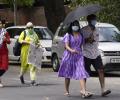
The India meteorological department said heatwave conditions will persist for at least two more days.

'People told me to go back to school and leave climate issues to adults. But if adults had done their job, I wouldn't be here protesting.' At just 14, climate activist Licypriya Kangujam says children are paying the price for a crisis they did not create, while governments continue to make promises without delivering meaningful change.

'During the hot season (April to June), above-normal minimum temperatures are likely over most parts of the country, except in some regions of Maharashtra and Telangana, where minimum temperatures are expected to be normal to below normal,' IMD said.

Bencic and Paul coasted through the first set but won a total of just 12 points in the second set as the match went into a tiebreak.
India is expected to experience hotter-than-usual temperatures from April to June, with more heatwave days in central and eastern India and the northwestern plains, the IMD said. Most parts of the country will see higher-than-normal maximum temperatures, except for some areas in western and eastern India where the temperatures are expected to be normal. Minimum temperatures will also be above normal in most regions. The IMD has warned that landslides could occur in parts of Kerala and Karnataka in the Western Ghats and that northeastern states might face flooding in April.
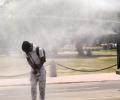
Delhi is experiencing its first heatwave of the season, with temperatures reaching 40.2 degrees Celsius. Doctors have warned that exposure to extreme heat can lead to a range of health issues, from mild rashes and muscle cramps to serious conditions like heat exhaustion and heatstroke. They advise staying hydrated, avoiding outdoor activities during peak hours, and wearing light, breathable clothes. Vulnerable groups like children, the elderly, and those with pre-existing conditions are at greater risk.
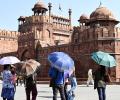
In Rajasthan, Pilani recorded 44.9 degrees Celsius, Phalodi and Churu touched 43.8 degrees Celsius and 43.5 degrees Celsius respectively, while Bikaner and Jaipur registered 43.4 degrees Celsius and 43 degrees Celsius.

Heatwave conditions are expected over northwest India during the next five days, with Punjab, Haryana, Rajasthan and Delhi predicted to bear the maximum impact, the India Meteorological Department (IMD) said on Thursday.

As Singapore, New York and Melbourne have shown, cities can mitigate the impact of heatwaves if they have the will to create green infrastructure, explain Amit Kapoor & Bibek Debroy.

Severe heatwaves, responsible for thousands of deaths across India over the last few decades, are increasing with alarming frequency and soon the country could become one of the first places in the world to experience heatwaves that break the human survivability limit, according to a new report.

Ten to 20 days of heatwave are expected against the normal of four to eight days in the entire April-June period.
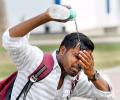
Heatwave conditions have been prevailing in Odisha since April 15 and the Gangetic West Bengal since April 17, according to the MeT department.

The unrelenting heatwave sweeping large parts of the country has claimed at least 110 lives and left over 40,000 people grappling with suspected heatstroke between March 1 and June 18 this year, health ministry sources said on Thursday.

Temperatures remained above 45 degrees Celsius in large parts of Rajasthan, Haryana, Delhi, Chandigarh and Uttar Pradesh, affecting daily life as many chose to remain indoors in the afternoon.

The IMD said heatwave conditions are likely to continue over the northern plains, and central and southern parts of the country for two more days and abate gradually.
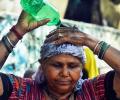
Temperatures are likely to remain in a similar range until Thursday, with a gradual fall expected from June 13.
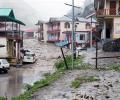
'The government only wakes up after devastation.' 'The government does not understand the gravity of the situation nor they do not want to understand the gravity of the situation.'
Heatwaves claimed more than 17,000 lives in 50 years in India, according to a paper authored by M Rajeevan, former secretary of Ministry of Earth Sciences, along with scientists Kamaljit Ray, S S Ray, R K Giri and A P Dimri.

The threshold for a heat wave is met when the maximum temperature of a weather station reaches at least 40 degrees Celsius in the plains, 37 degrees in coastal areas, and 30 degrees in hilly regions, and the departure from normal is at least 4.5 notches.

According to an IMD forecast issued on Thursday, a heatwave spell will persist over northwest and central India during the next five days and over east India during the next three days.

The maximum temperature at the Safdarjung Observatory, Delhi's base station, is likely to rise to 45 degrees Celsius.

Western disturbances are near Pakistan-Afghanistan and are moving towards Delhi and thunderstorms or dust storms are likely to be experienced in northwest India, senior scientist at IMD RK Jenamani told ANI.
'The intensity and frequency of heatwaves will be much higher than in previous years over Punjab, Haryana, Rajasthan, Gujarat, Madhya Pradesh and Odisha.'

Glimpses from India and around the world that will make you smile and cry.
